Booth guides
Mirror Photo Booth vs Open-Air Photo Booth: Which Should You Choose?
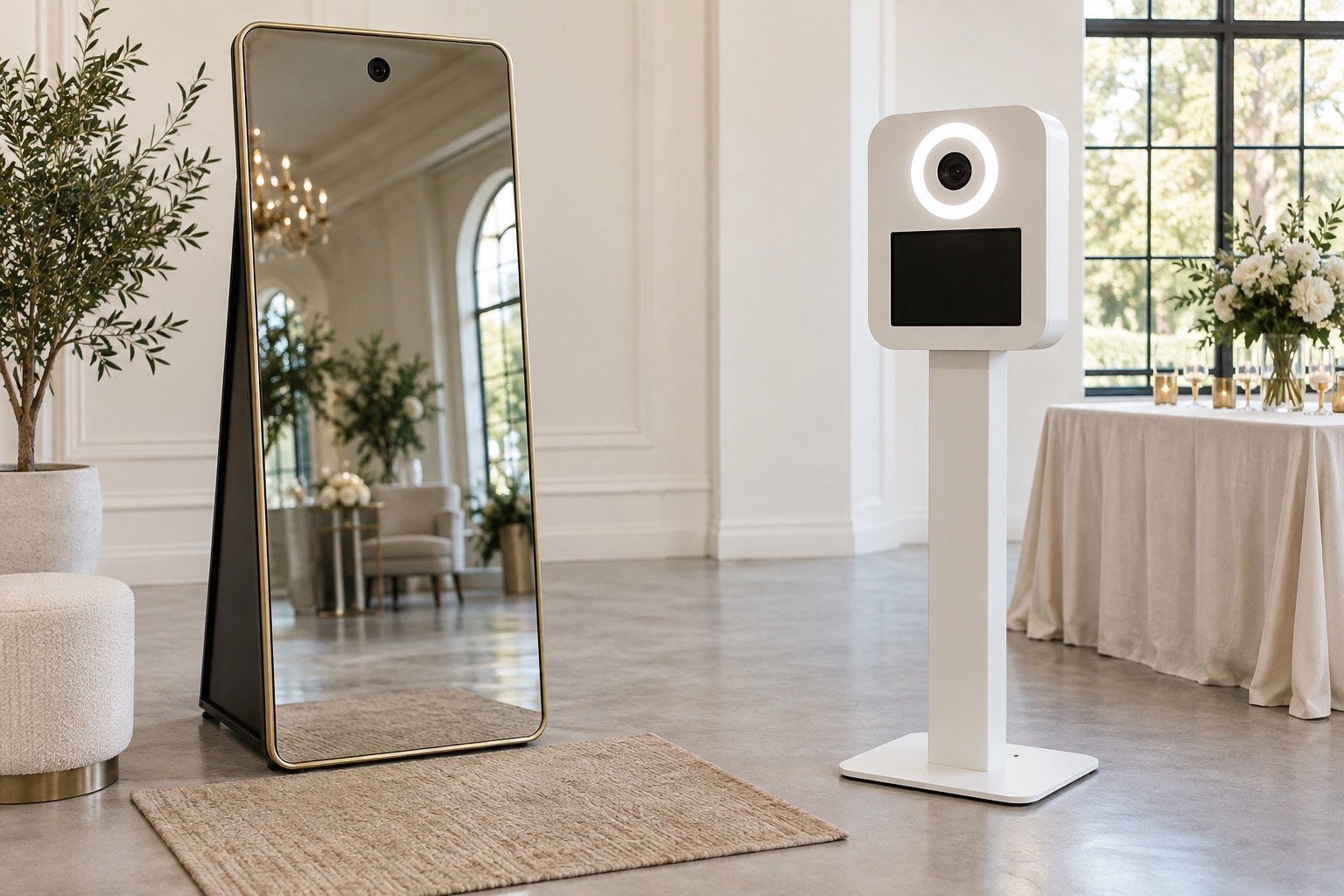
A mirror booth describes the style of the camera unit; open-air describes a setup without an enclosed cabin. A mirror booth can therefore be open-air too. When comparing packages, the useful question is whether you prefer a full-length mirror unit or a compact camera kiosk—and what each complete setup includes.
Understand what you are comparing
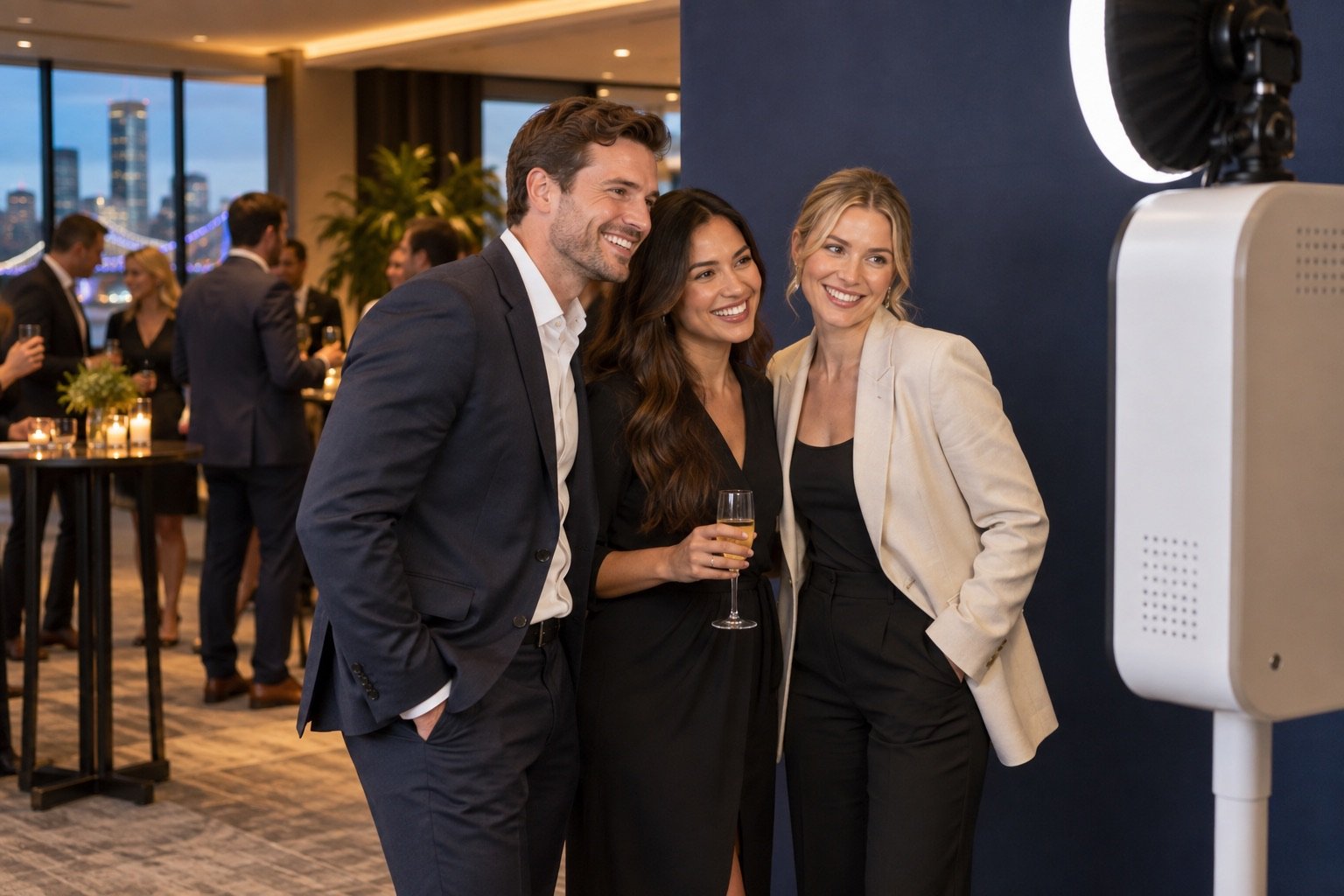
A mirror booth presents guests with a tall reflective front. Depending on the model, it may include an interactive screen or prompts. A compact open-air kiosk usually places the camera and screen in a smaller freestanding unit facing the posing area.
Both can photograph guests against a separate backdrop. Neither label alone tells you the image quality, print size, number of copies or digital delivery method. Ask about the exact equipment and output in the package you are considering.
Match the appearance to the room
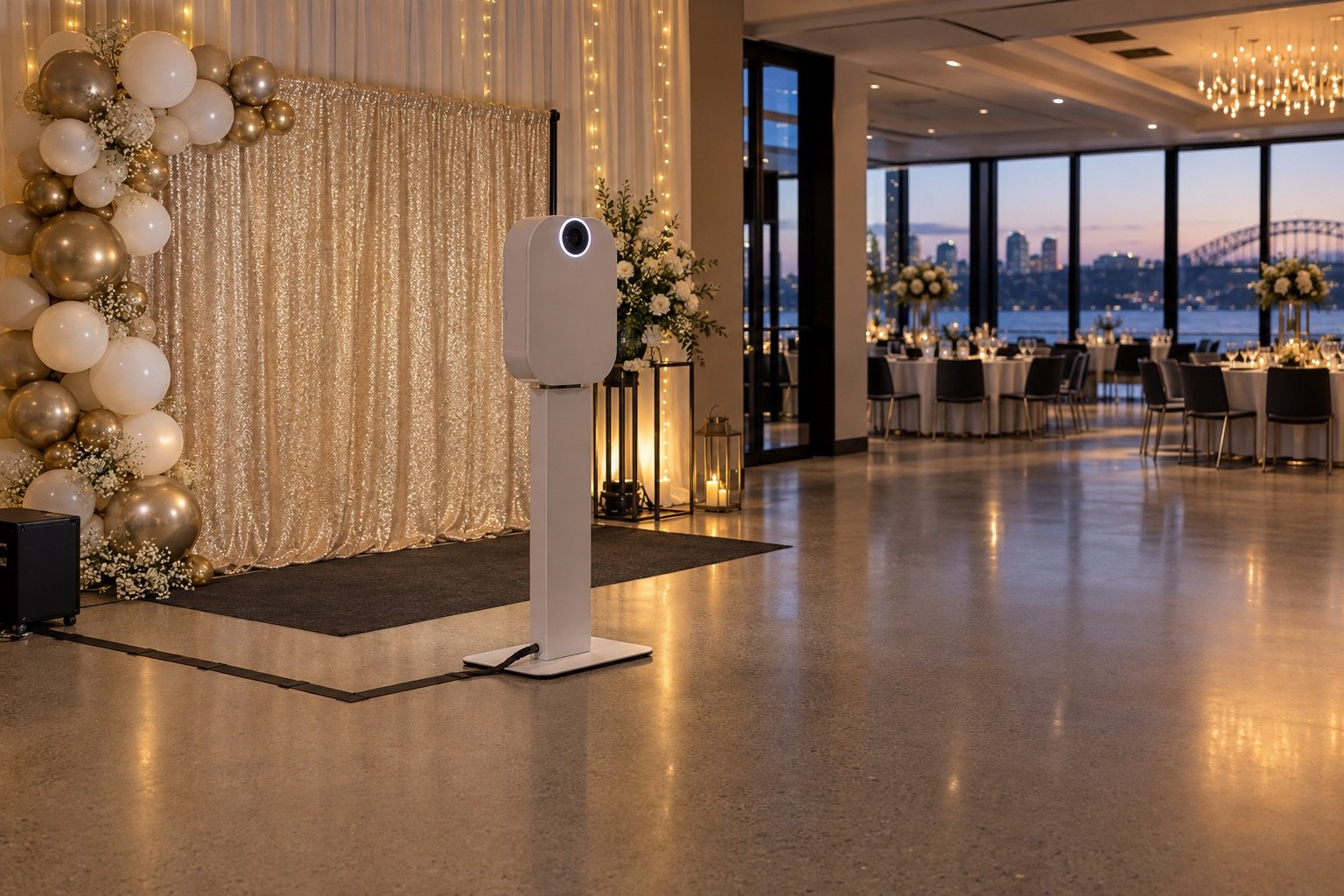
A full-length mirror can become a prominent feature in a reception room. A compact kiosk may suit a simpler visual scheme or a location where you want the backdrop and guests to be the focus. Look at photographs of the supplier’s actual setup, including lights, printer and cabling.
Check the backdrop as carefully as the booth. Its colour, width and placement influence the finished images. An attractive mirror does not remove the need to plan what appears behind the people being photographed.
Compare the complete footprint
A smaller camera unit does not necessarily mean a much smaller operating area. Both setups need space between the camera and guests, plus any backdrop, lighting, props and queue. Ask for the full recommended footprint and clearance, not just the size of the stand.
Share door widths, stairs and lift access with the supplier. A booth that fits beautifully in the ballroom still needs a workable delivery route. Confirm the final placement with the venue before seating plans are locked in.
Think about how guests participate
Ask how a session starts, where guests should look and how they collect their result. If a mirror offers touch interaction, find out which features are actually enabled. If you prefer a simple pose-and-print experience, say so when comparing options.
Discuss seated access, the position of the controls and the camera framing. A full-length mirror does not automatically guarantee full-length photographs or accessibility for every guest. Ask the supplier how the exact setup can accommodate your group.
Compare inclusions rather than labels
| Detail | What to confirm |
|---|---|
| Photos | Sample images, framing and lighting. |
| Printing | Layout, size, copies and package limits. |
| Digital files | Guest delivery, host gallery and availability period. |
| Operation | Attendant, setup time and paid operating hours. |
| Styling | Backdrop, props and artwork approval. |
Compare two written quotes using the same event date, venue and hours. This makes it easier to spot whether a difference in price comes from the booth itself or from extra inclusions.
Make the choice around your priorities
Choose the mirror style if its appearance and confirmed interaction suit your room and guests. Consider a compact kiosk if you prefer that look and its actual setup meets your requirements. Request advice using a venue photograph and a simple floor plan rather than choosing from a product name alone.
Explore MemoShot’s mirror booth and photo booth page, then compare the current packages. If you are considering video instead of still photos, read our 360 versus traditional booth guide.